Manufacturing Flexibility - Does JSW Actually Offer Modularity?
In today’s manufacturing landscape, production managers aren't just looking for speed—they’re managing risk.
The market frought with shrinking product lifecycles, rapidly evolving material specifications, ever changing customer trends and supply chain pivots.
For decades, the industry standard was rigid: companies invested in massive, highly customized hydraulic presses for specialized contracts, only to be left with inflexible, energy-heavy assets when those contracts ended or market demands shifted.
Over the last 30 years sentiment on the factory floor has changed. The market has been aggressively shifting away from rigid setups and toward fully electric, adaptable "smart" ecosystems.
Manufacturers need machinery that acts as a flexible foundation—capable of handling high-precision niche jobs today, and pivoting to entirely different production lines tomorrow.
Repeatability at The Industries Widest Tonnage
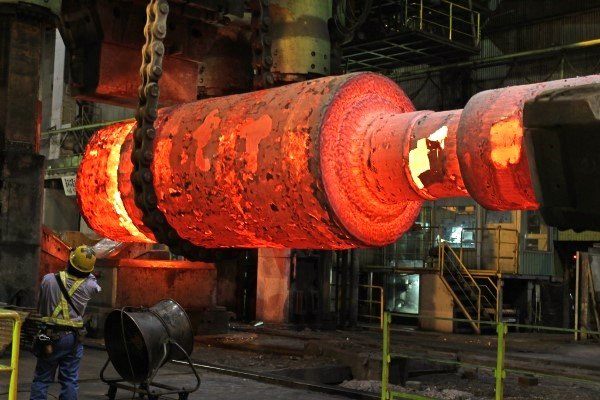
Since the 1980’s Japan Steel Works (JSW) we’re the leading pioneers in not only the understanding of steel as steel manufacturers for product repeatability (accounting for 40% of moulding machine capability) but for developing all electric servo-drive technology but at scale (30-4,000 tons), taking the industry’s initial belief that electric was only capable on small scale and giving client breadth of flexibility.
Nearly 70 years and over 90,000 machine sales later, JSW has further expanded into modular systems so clients can have all the benefit of repeatability, breadth of tonnage and modular flexibility.
1. Clamping Force and Injection Unit Combinations
With 3-4 different injection units per clamp tonnage and an additional 3 options of screw diameters per injection unit, JSW offers 100’s of combinations across their entire machine portfolio from 30 up to 4000+ ton’s - the widest on the all electric market
So if you’re running a thick-walled component that requires a massive 520V injection unit but relatively low clamp tonnage, there options to configure that.
Meaning clients invest in the exact injection unit, thats fixed, but capable of running multiple types of mold, projects or future portfolios of products rather than being rigid and un-able to pivot to their market needs.
2. Tooling Adaptability: Wide Platens and Extended Daylight
Modern part designs require increasingly complex moulds with elaborate core pulls or multi-cavity layouts.
To accommodate this without forcing a client to buy a larger machine, JSW engineer our systems (like the J-AD and J-ADS series) with wide-platen specifications and extended daylight between the tie-bars.
This allows clients to mount larger, more intricate moulds on a smaller tonnage footprint, optimizing both capital expenditure and factory floor space.
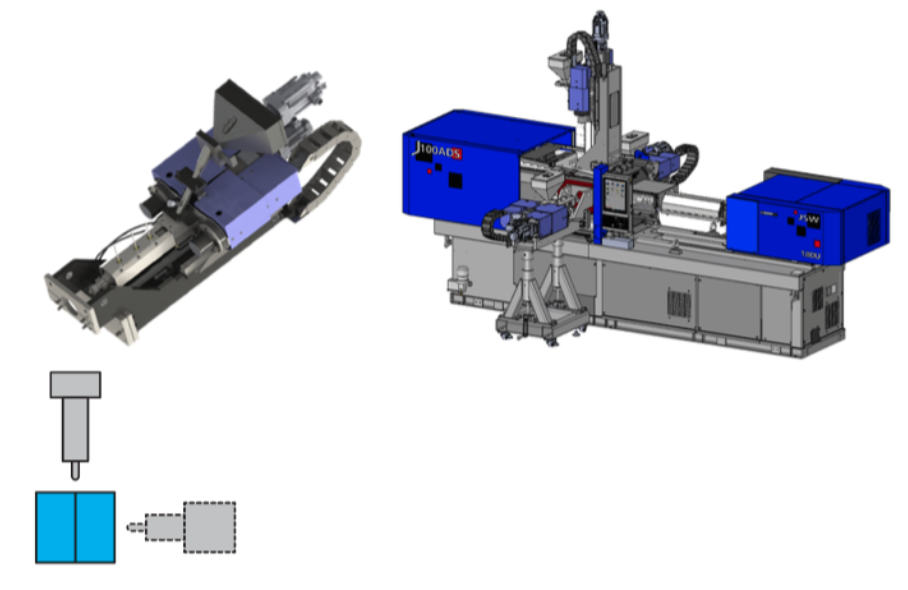
JSW FLiP Unit for adaptable multi-colour/material injection molding
3. Two Colour or Multi-Material: The JSW FLiP® Unit
When market trends demand two-color or multi-material products, manufacturers typically face the prohibitive cost of purchasing dedicated multi-shot machines.
The JSW FLiP® unit is a retrofittable sub-injection unit allows clients to seamlessly transform a standard single-shot machine into a multi-component system, giving the agility to take on specialized contracts using existing infrastructure.
4. Digital Integration: J-WiSe™ and SYSCOM
Nimble hardware requires intelligent control. JSW machines are powered by SYSCOM controllers and our proprietary J-WiSe™ IoT solutions, which integrate the machine directly into your smart-factory ecosystem.
Through features like High Accuracy Volume Control (HAVC) and Injection Weight and Cushion Stability (IWCS), the software adapts to your exact hardware configuration and tracks real-time data. Even if you change your physical setup or mould, the control interface ensures high-speed, repeatable precision.
“In a market where adaptability dictates survival, true modularity is the ability to reconfigure your capital assets as fast as your customers change their minds.
By bringing the widest tonnage in the market, proprietary knowledge in steel (known for creating ultra repeatability), with 100’s of options in modular systems - Clients can stay flexible and stretch factory capabilities well into the future”