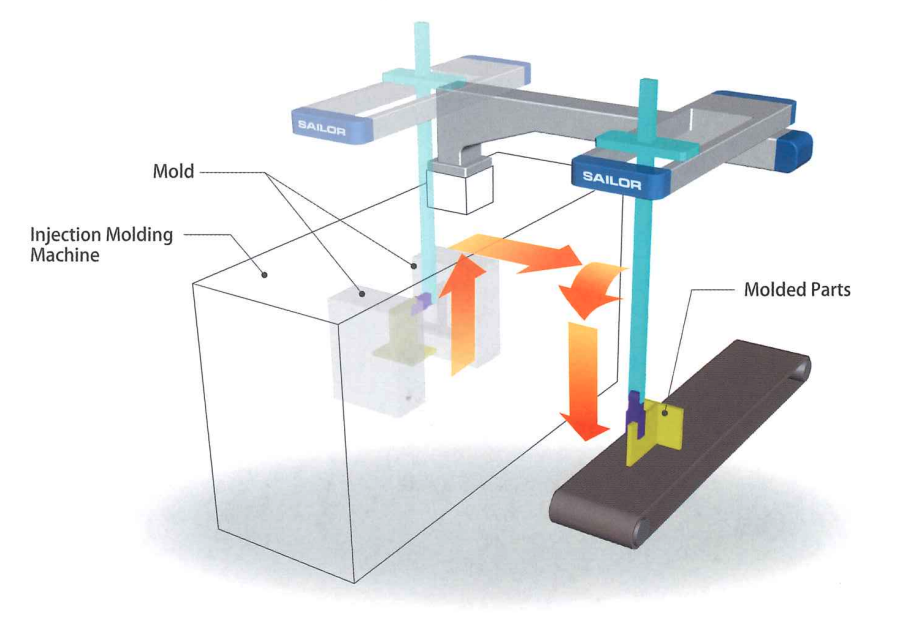


Sailor (World's Fastest) Robot & Factory Wide Automation.
Sailor (World's Fastest) Robot & Factory Wide Automation.
Is Your Robot’s Belt Causing Production to Halt for Hours and Forcing Manufacturing into Slower Cycles?
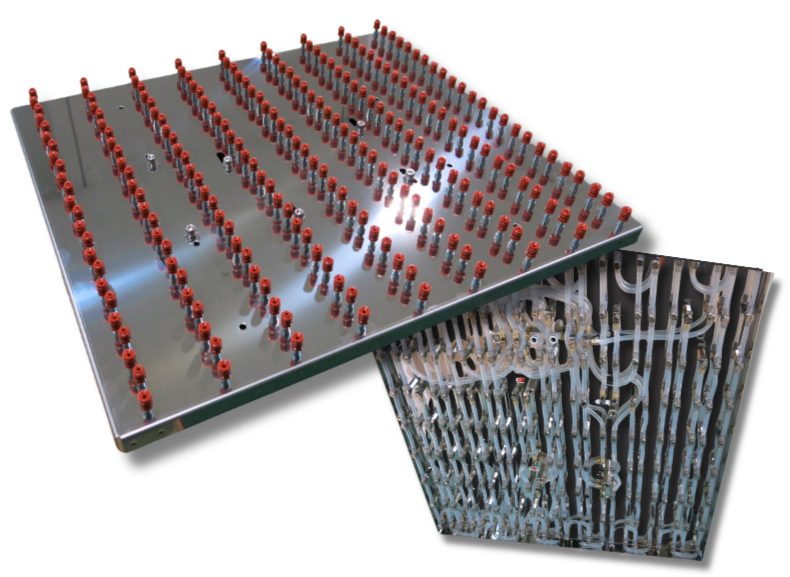
For high cavitation and lights out/dark factory situations, a robots end of arm tooling (EOAT) tends to be heavy in order to pick-up and eject large amounts of products.
And getting heavy tools to align accurately with multiple cavities at fast speeds without the need for human intervention, means once a robot is structurally setup for use, anything that could vary the movement must be eliminated.
So how does a traditional robot belt drive suddenly vary my production line?
Traditional high-speed robots use high-tension rubber timing belts to drive their vertical and horizontal axes.
Overtime operating a very heavy EOAT during thousands of high-speed cycles causes these drive belts to naturally stretch and degrade by a fraction of a millimetre.
This micro-stretching overtime causes over stretch and a spring back (similar visually to a rubber band wearing out).
This introduces a vibration into the movement as the inertia from the micro-stretching travels down in the robot and into the tool, causing critical misalignment and damages including:
Factory-wide hour long production stoppage
Increase in engineers/engineer time for fixes
Forces factories into slower cycles (reducing ROI)
Increases Opex from repair to tool, belt, call out fees
Multi-million dollar tool damage
Reject increase as vibration causes products to fall/be damaged
Introduces contamination from belt shed (scrapping clean room registrations in medical parts)
Sailor Automation Eliminates Vibration and Increasing Speed Using Rack & Pinion Belt and RZ-Σ Operating System® with Harmonic Curve Technology
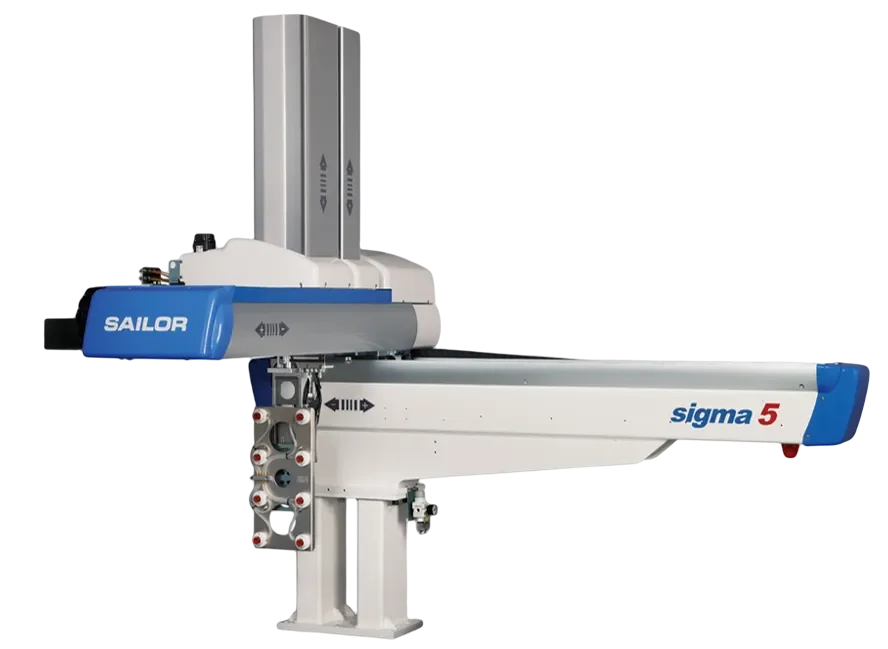
Sailor Robot Build:
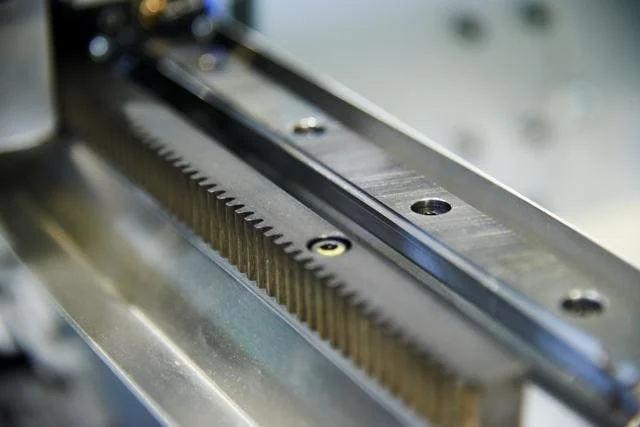
Rack & Pinion, AC Servo Motor
& Carbon Fibre
Sailor robotic arm belts are built using Rack and Pinion, heavy duty mechanical gear and teeth to drastically reduce traditional belt wear and engineer intervention from constant tension adjustments/replacements, increasing Opex.
Powering the rigid Rack and Pinion with a high-power motor ‘AC Servo’, allow for robotic arms to handle large EOAT loads and therefore allowing for low weight carbon fibre builds.
A drastic weight reduction can dramatically increase cycle times and increase production, but still enable longevity and repeatability. With most robots lasting over 25+ years with very little intervention.
Worlds Fastest Top Entry Robot:
0.19 Seconds Take Out*
0.44 Seconds Cycle*
Large EOAT: 256 Cavities in 10 Seconds*
Long Lifetime:
25+ Years*
Sailor Robot Operating System:
RZ-Σ Operating System® with Harmonic Curve For Speed
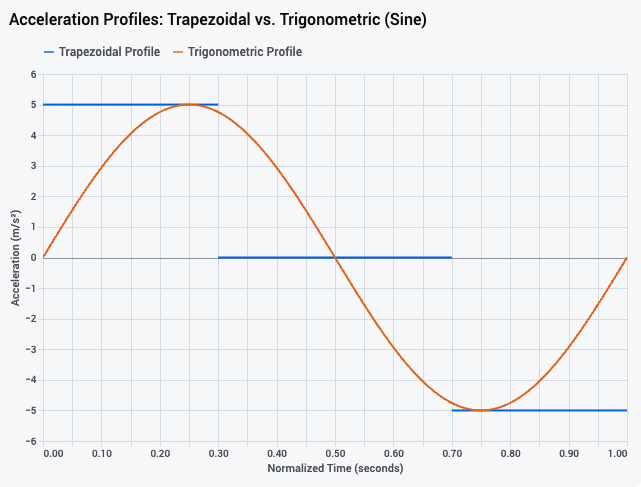
Sailor pair’s strong physical build with patented RZ-Σ Operating System® that uses a vibration suppressing Trigonometric (Sine) based algorithm AKA ‘Harmonic Curve’ to eliminate silent cycle time killers known as ‘setting time’.
In basic terms, the RZ-Σ Operating System® Sine algorithm pairs huge acceleration with a smooth wave pattern at the end of a robots stroke, to reduce sudden jerking inertia in the movement of the robots arm and tool.
When a robot stops at its final position (setting time) in traditional robots at this point there is still some inertia (shake) taking place so the robot has to wait until this stops before performing its action.
Setting time is where silent cycle time killers occur.
As RZ-Σ Operating System® follows a Sine curve that anticipates and stamps out inertia before it evens begins, sailors RZ-Σ Operating System® achieves a near zero setting time, making for some of the fastest take out times in the world.
Full-Factory Automation & Other Features:
Sailor have many further applications and robot options both pre and post moulding when it comes to full-factory automation, these include
Insert labelling
Moulded product delivery
Inspection
Boxing and box changers
Bagging
Static elimination
Metal insert
Gate cutting
Hinge bending
Assembly
Cap closures
Clean room specification robotics
Small and side entry robots
Fastest delivery time: 6 weeks**